Trade in & catch of Shark & Ray Products

A Brief Overview
- Legal frameworks influence the consumption of shark meat
- Important agreements, such as the granting of protected status at CITES conferences, can help
- There are targeted catches and bycatch; in Germany, the focus is primarily on imports and further processing
- Good news from the CMS COP 15 in Brazil: Protected status for several shark species
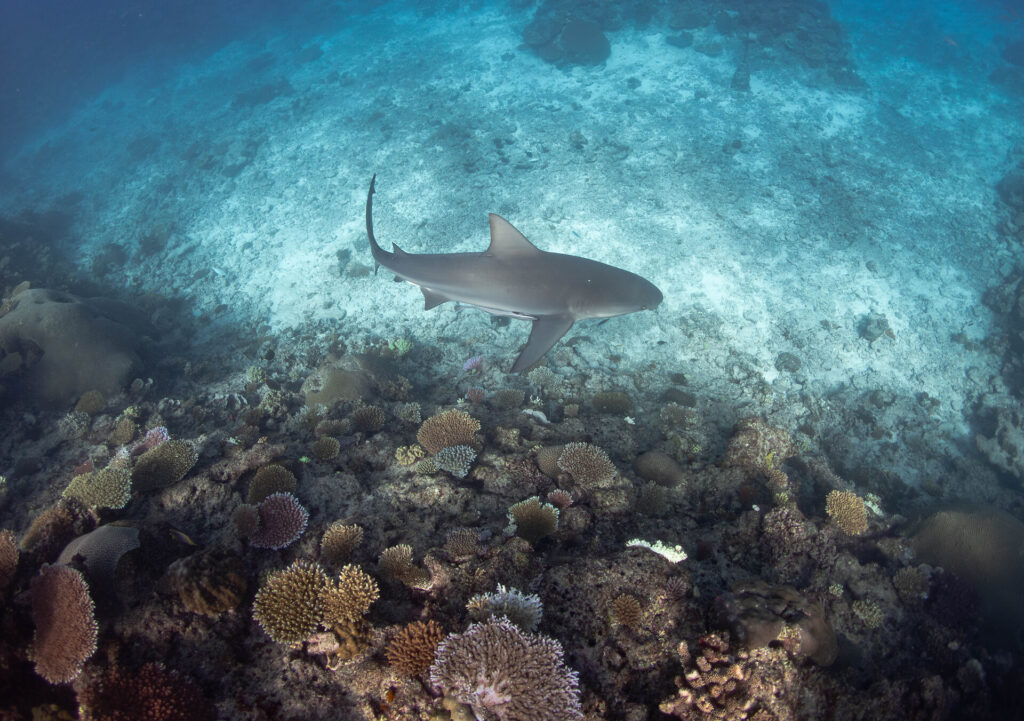
There was good news and progress regarding shark conservation at the Global Conference on the Conservation of Migratory Species (CMS COP 15) held in Brazil in March: Among others, the bowhead hammerhead shark (Sphyrna lewini), thresher sharks (Alopias spec.), and the great hammerhead shark (Sphyrna mokarran) were granted protected status.
Why are decisions like these so important for shark species and marine ecosystems worldwide? Millions of sharks are caught every year around the world. One consequence of this is that, according to the IUCN Red List, approximately 37% of all shark and ray species are threatened with extinction. Yet sharks are so essential to marine ecosystems: for example, they regulate prey populations and keep food webs stable.
Sharks are caught intentionally—for example, for shark meat or shark liver oil—or as bycatch in industrial fishing. There are several reasons why this happens at all.
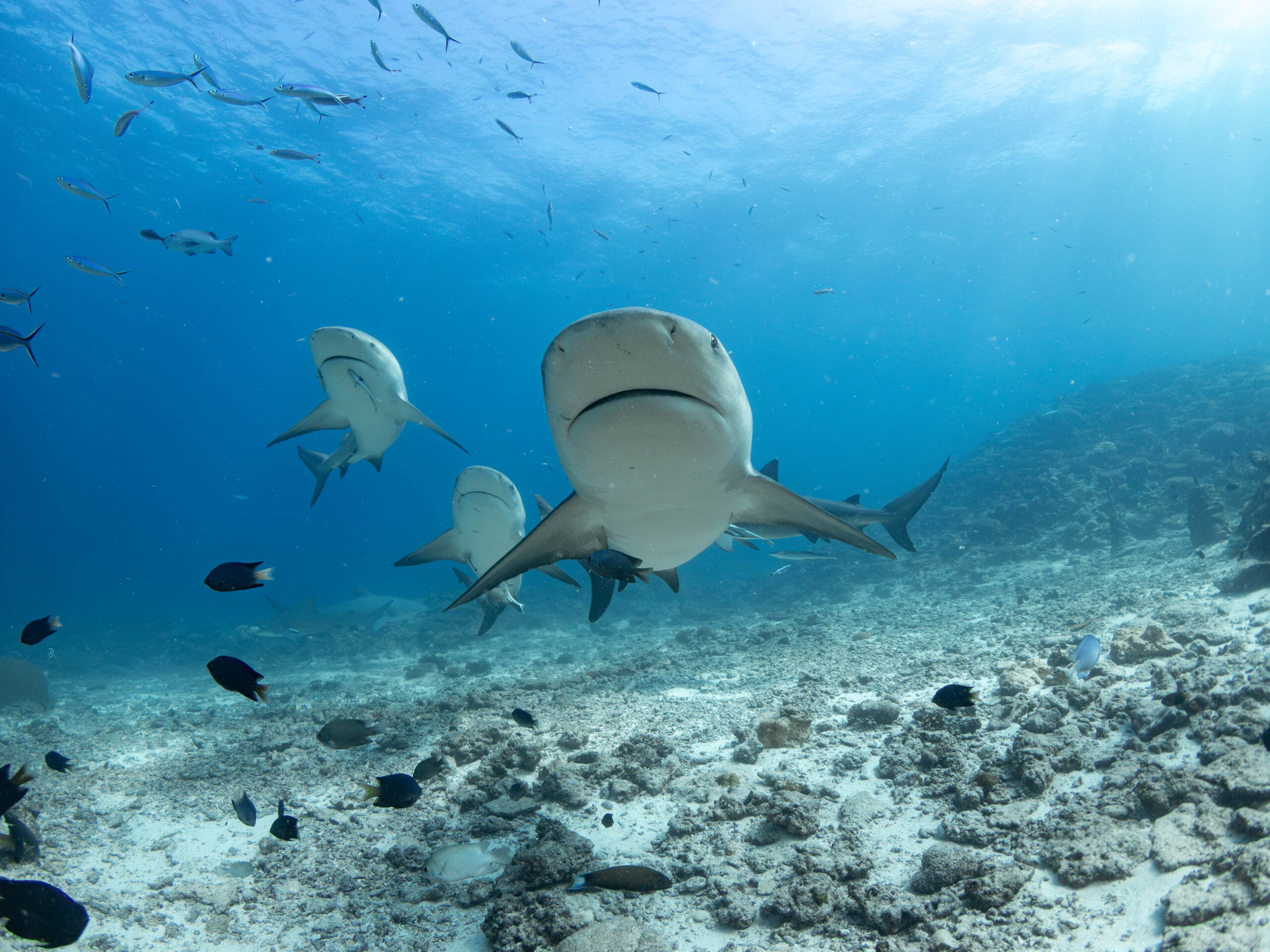
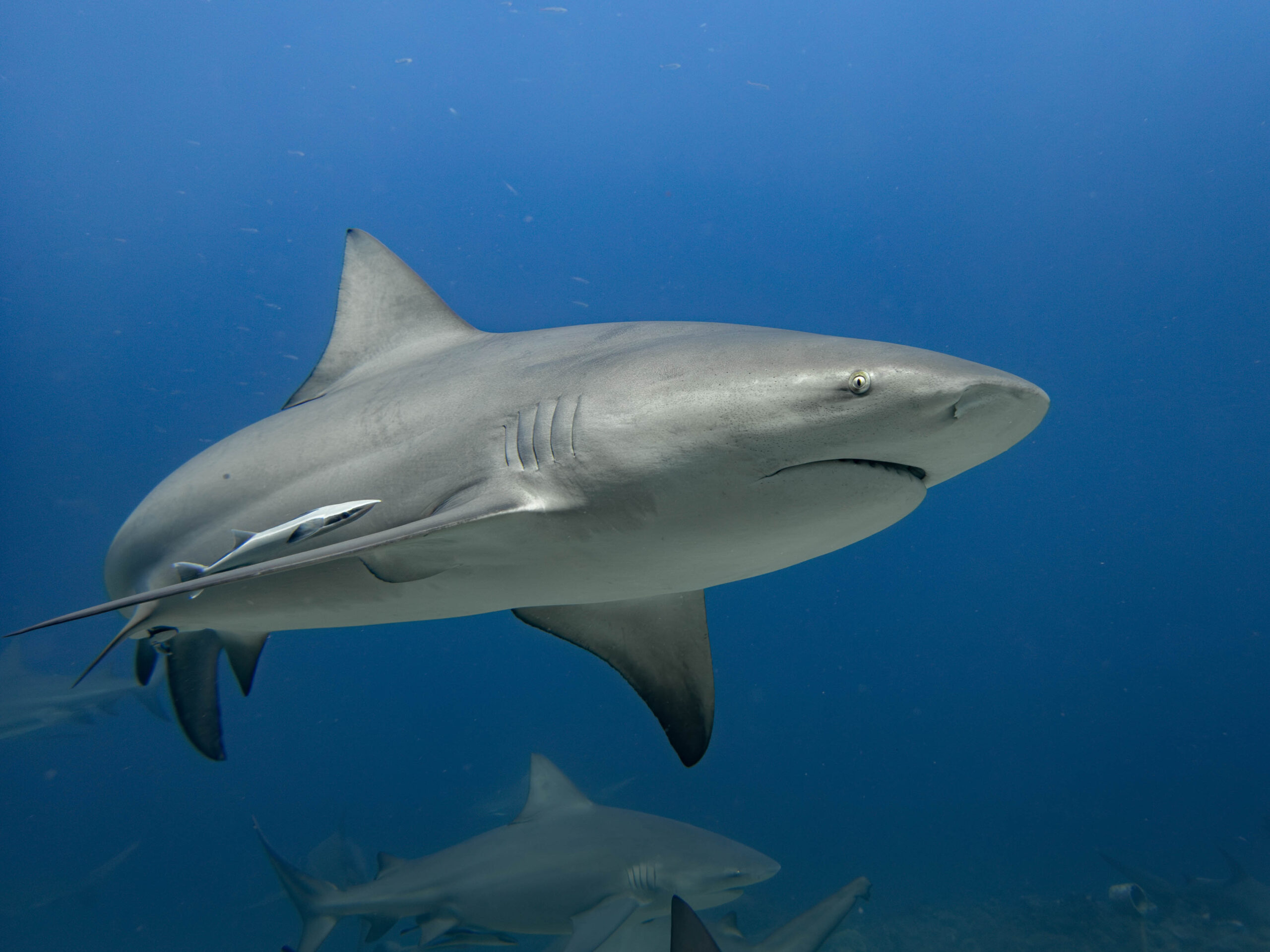
Photo: Jan Bierwirth
The Reasons and Causes
Legal Framework
In the EU, there are fishing bans on particularly endangered shark species. These include, for example, the basking shark. If one is caught accidentally, it must be released back into the ocean. At the same time, the catch and the release must be documented.
Releasing sharks back into the ocean is not permitted for all shark species. Only specific shark species that are critically endangered are covered by the release regulation. Why doesn’t this apply to all sharks? In short: because of so-called shark finning. In this practice, the shark’s fin is cut off while it is still at sea, as the fin is highly valuable. The shark is then thrown back into the sea and—without its fin—can no longer survive.
That is why the EU has had the “Fins Naturally Attached” (FNA) rule in place since 2013: Under this rule, whole animals must be “landed”—with their fins naturally attached to their bodies. This is a solution to the shark finning problem, but it has led to another issue: it has also caused an increase in the consumption of shark meat. While the FNA rule has reduced so-called “finning” at sea, it has created new markets for shark meat. In addition, catch reports are often inaccurate or misdeclared. DNA analyses regularly show that protected species are being sold illegally.
Although there is no commercial shark fishing in Germany, imports and processing continue to take place. Monitoring of these activities is carried out by the Federal Agency for Nature Conservation (BfN) and customs authorities.
What can be done to help?
Important agreements for the protection of shark and ray species include the Washington Convention on International Trade in Endangered Species (CITES), the Bonn Convention (CMS—Convention on the Conservation of Migratory Species of Wild Animals), and the United Nations Convention on the Law of the Sea (UNCLOS: United Nations Convention on the Law of the Sea). Since the most recent CITES conferences, over 70 shark and ray species have been placed under protection (Appendix II or I).
Read this blog post to find out what successes the 2025 CITES conference achieved!
Some concrete solutions
For example, at a CITES conference, shark species can be listed under the so-called “Appendix I” protection status. This would prohibit international trade in these species.

your contact person Loreen Schaubeck
We report on Shark protection stay informed!


Don’t miss any events, current projects, educational programs and news! Sign up for our free newsletter and stay up to date!